
Core Synopsis
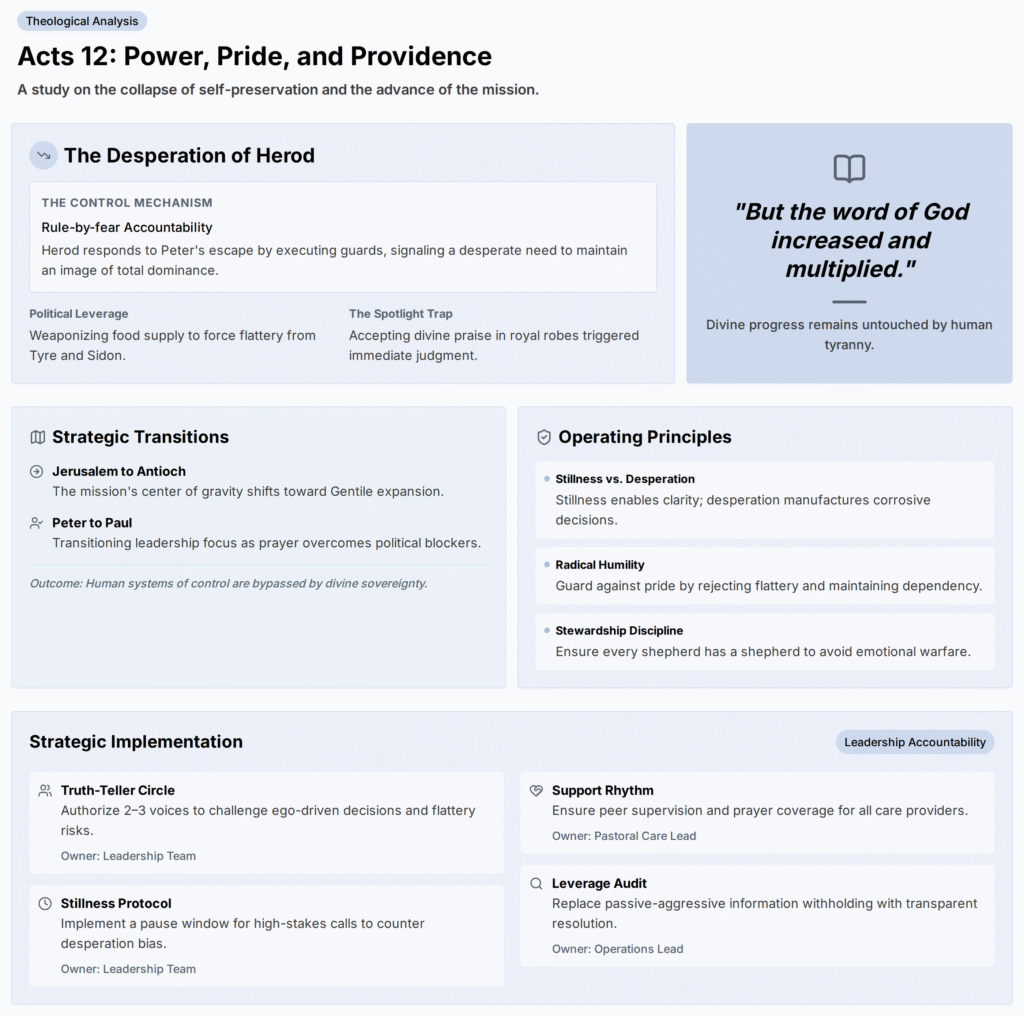
Power sought for self-preservation collapses; humility under God’s authority endures and advances the mission. Acts 12 closes with a stark causal chain: Herod Agrippa I, obsessed with public approval and leverage over Tyre and Sidon, escalates control—executing guards, retreating to Caesarea to reassert influence, staging a spectacle in royal robes, and accepting flattery as divinity. Luke reports the immediate consequence: divine judgment and Herod’s death, while the Word keeps spreading. The proof pattern is consistent: human authority is real but strictly limited; prayerful dependence is determinative. Peter’s prison chains fall, the church’s vulnerability flips to flourishing, James’s death does not stall the mission, and the strategic center of gravity shifts from Jerusalem to Antioch and from Peter to Paul. We are accountable for resisting drift into pride and desperation; we are a people who must practice radical humility, be still, and trust God’s timing. The stakes are operational and moral: decisions made from self-preservation corrode trust and clarity; decisions made from humility and prayer sustain momentum and protect the mission.
Power, Pride, and Providence: The Causal Spine of Acts 12
The Desperation Spiral: Herod’s Control Tactics
- Status: Herod’s regime reacts to Peter’s escape with “no small commotion”; guards are cross-examined and executed—signaling a rule-by-fear model with life-or-death accountability for failure.
- Dynamic: Herod relocates from Judea to Caesarea to regain image control in home territory, leveraging spectacle and patronage networks to reestablish dominance.
Political Economy of Flattery: Tyre & Sidon’s Dependence
- Context: Tyre and Sidon require food from the king’s territory; they secure access via Blastus, aiming for peace.
- Mechanism: Herod weaponizes withholding (passive-aggressive leverage) to inflate personal power; the people counter with performative praise to secure supply.
The Spotlight Trap: Accepting Glory That Isn’t Yours
- Event: On the appointed day, Herod in shimmering royal attire delivers a public address; the crowd declares him a god.
- Judgment: “Immediately” Herod is struck by an angel (Luke’s theological causality); Josephus notes a terminal gut issue (secular corroboration). Acceptance of divine praise triggers divine discipline.
The Contrasts That Matter: Leadership Signals
- Peter vs. Herod: Peter rejects worship (Acts 10); Herod absorbs it. Good leaders deflect glory to God and credit to their people; prideful leaders hoard recognition and punish failure.
- Human vs. Divine Authority: Herod can command soldiers but cannot command God; God’s sovereignty bypasses human control systems.
The Church’s Strategic Posture: Prayer, Patience, and Pivot
- Prayer Outcomes: Peter’s escape, mission continuity, and Word flourishing demonstrate the leverage of prayer over politics.
- Strategic Transition: Focus moves from Jerusalem to Antioch and from Peter to Paul; Barnabas and Saul complete relief delivery and return with John Mark, foreshadowing Gentile expansion and future internal friction.
Operating Principles: How Not to Drift
- Be Still vs. Act from Desperation: Stillness enables clarity and trust; desperation manufactures bad decisions and erodes relationships.
- Radical Humility: Guard against pride’s drift through truth-tellers, rejecting flattery, and maintaining dependency on God.
- Stewardship Discipline: Every shepherd needs a shepherd; leaders must rest in God to avoid burnout and emotional warfare.